Filling one’s own cup first: Self-compassion can reduce burnout among rehabilitation providers
Robert Simpson
In any commercial flight, there’s a safety video or demonstration before takeoff: in the case of an emergency, passengers are told to put on their oxygen mask first before helping others with their masks. But many of us have experienced situations where we’ve had to set aside our own needs to prioritize others. For health care providers (HCPs), this dynamic is reflected in high rates of burnout within the profession.
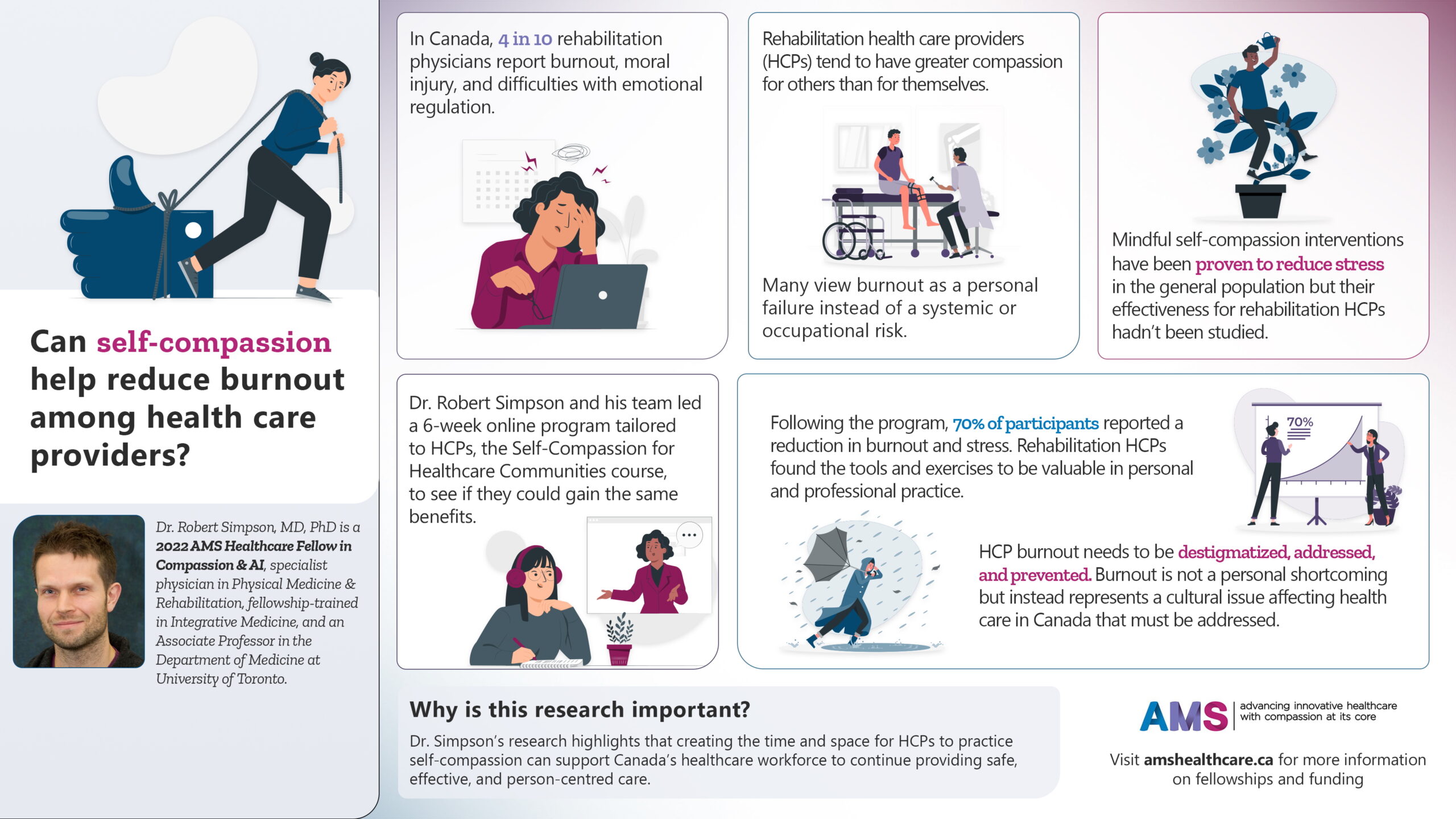
In a time where Canada’s health systems are at full capacity, it’s critical that HCPs are given the time, space, and resources to take care of themselves so they can continue to provide quality care. Dr. Robert Simpson is a 2022 AMS Healthcare Fellow in Compassion and Artificial Intelligence (AI) and a physiatrist at the Sunnybrook Research Institute. He assessed whether an online self-compassion course for rehabilitation physicians could improve burnout and related symptoms.
As there were no Canadian data on burnout amongst rehabilitation physicians, Dr. Simpson and his team first did a national study. They found that 4 in 10 rehabilitation physicians met the criteria for burnout, moral injury, and had difficulties with emotional regulation. In particular, clinicians who were younger and those who were female experienced higher levels of burnout. Through interviews with the rehabilitation physicians, Dr. Simpson and his team learned that the origins of burnout may stem from a hidden curriculum that starts in medical school and carries over into residency and beyond.
“Healthcare professionals have to maintain very high-performance levels. Self-criticism is a common characteristic. They refine their performance throughout their training through external critique, which becomes internalized,” Dr. Simpson explained.
Compassion is a required component of quality health care, and Dr. Simpson found that rehabilitation physicians find it much easier to be compassionate to others than to themselves. He also found that many rehabilitation physicians find burnout to be shameful because they believe they aren’t meeting their colleagues and superiors’ expectations.
“There’s considerable evidence for self-compassion training improving compassion and mindfulness and reducing distress, anxiety, and depression in the general population. But this approach had never been studied in specialist rehab providers,” said Dr. Simpson.
He ran an online course, the Self-Compassion for Healthcare Communities course, over lunchtime for six consecutive weeks, where rehabilitation physicians learned strategies on how to be more self-compassionate. Self-compassion was a new concept for many of the participants, but being with peers that had similar experiences and feelings was valuable to them. Around 70% of clinicians who were experiencing burnout and difficulty with emotional regulation reported a significant reduction in burnout and stress after the course. They also found that having tools and exercises to use and practice in the personal and professional settings to be very valuable.
While compassion is a required component in medicine, there isn’t a standardized way to train people nor to measure compassion. Dr. Simpson emphasizes the need for a cultural change in health systems. Burnout has been described previously as rehabilitation’s hidden impairment, and this needs to be addressed openly and destigmatized so HCPs can continue to do what they do best—caring for their patients.
“When people care for themselves, they tend to be more empathetic, more compassionate, and more likely to adhere to guidelines. They also tend to make less mistakes. So, this is an investment in the healthcare system because it ensures that professionals are also less likely to leave,” he said.
Dr. Simpson found the explicit emphasis and investment in compassion-driven research were significant draws of the AMS Healthcare Fellowship. He credits the fellowship for enabling him to complete his work on pursuing his work on self-compassion. Additionally, he shared that joining a community of like-minded colleagues has provided excellent opportunities to build collaborations.
Since his 2022 AMS Healthcare Fellowship, Dr. Simpson has presented his findings locally, nationally, and internationally. He continues to lead mindful self-compassion training courses for both patients and HCPs. Currently, Dr. Simpson and his team are starting two randomized controlled trials focused on implementing mindfulness-based cognitive therapy at-scale for people with multiple sclerosis.
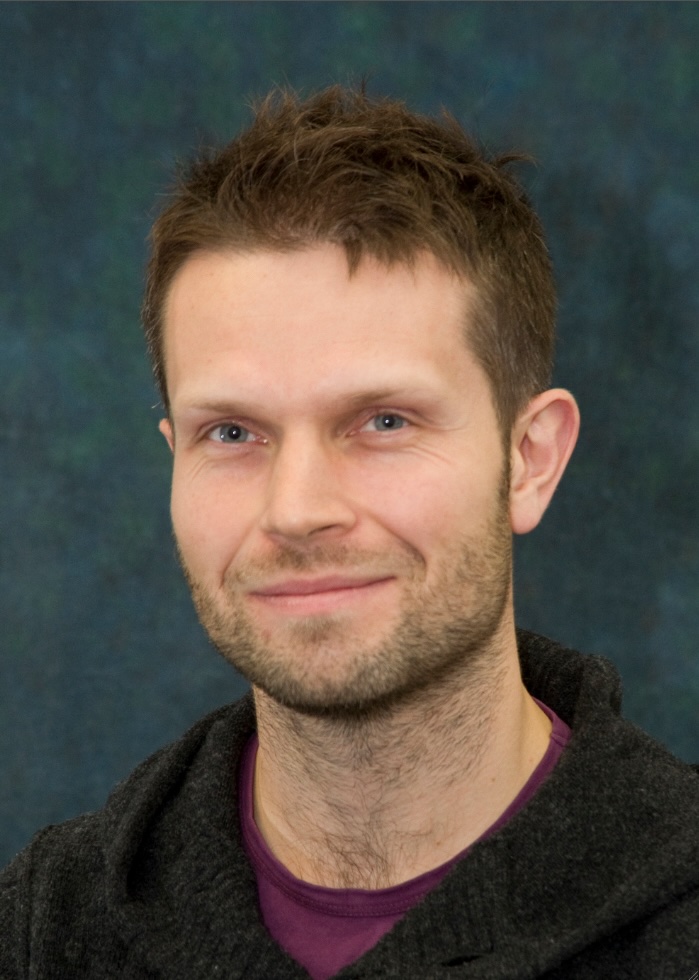
Dr. Robert Simpson, MD, PhD, is a specialist physician in Physical Medicine & Rehabilitation, fellowship trained in Integrative Medicine, and an Associate Professor in the Department of Medicine at University of Toronto. His research focus is on developing and evaluating complex interventions with mixed methods to improve the wellbeing of people with disabling long-term conditions and the healthcare providers who care for them.
Read Dr. Robert Simpson’s Fellowship Publications:
Simpson R, Cohen E, Kiss A, Wasilewski M, Hitzig S, Steinberg R, Steele Gray C, Munce S, Feinstein A, Robinson L, Bayley M, McIntyre M. Burnout in Canadian Physiatrists: A National Cross-sectional Survey. Am J Phys Med Rehabil. 2025 Nov 1;104(11):967-975. doi: 10.1097/PHM.0000000000002748.
Simpson R, Cohen E, Posa S, Wasilewski M, Feinstein A, Bayley M, Robinson L, Munce S, Steele Gray C, Kokorelias K. Understanding the Origins and Factors of Burnout in Physical Medicine and Rehabilitation: A Grounded Theory Analysis. JMIR Rehabil Assist Technol. (Accepted, in press)